
Native Bitcoin.
Programmable collateral.
Hashi is a decentralized Bitcoin collateralization primitive on Sui. Orchestrate native BTC directly from smart contracts—without centralized balance sheets.
Bitcoin has a multi-trillion dollar trust problem.
Centralized collateral models were expensive and introduced unacceptable risk. Opaque credit structures collapsed. Large holders need transparency, verifiability, and code-enforced guarantees.
Centralized lending failures
Opaque credit structures and centralized balance sheets led to cascading failures across the industry.
Opaque signature schemes
Investors had no visibility into how their Bitcoin was held, rehypothecated, or leveraged behind closed doors.
Complex trust assumptions
Trust assumptions were hidden in fine print.
Decentralized Bitcoin collateralization, enforced in code.
module example::loan;
use example::provider::LoanProvider;
use sui::coin::Coin;
use hashi::btc::BTC;
use
0x44f838219cf67b058f3b37907b655f226153c18e33dfcd0da559a844fea9b1c1::usdsui::USDSUI;
public struct Collateral has key, store {
id: UID,
collateral: Coin<BTC>,
ltv_ratio_bps: u64,
owner: address,
}
public struct LoanTerms has key, store {
id: UID,
ltv_ratio_bps: u16,
amount_collateralized: u64,
amount_borrowed: u64,
}
public fun collateralize(
provider: &mut LoanProvider,
collateral: Coin<BTC>,
ltv_ratio_bps: u16,
ctx: &mut TxContext,
): (Coin<USDSUI>, LoanTerms) {
let collateral = Collateral {
id: object::new(ctx),
collateral,
ltv_ratio_bps,
owner: ctx.sender(),
};
provider.originate_loan(collateral)
}
public fun payoff(
provider: &mut LoanProvider,
loan: LoanTerms,
payoff: Coin<USDSUI>,
ctx: &mut TxContext,
): Coin<BTC> {
assert!(loan.amount_borrowed ==
payoff.value());
provider.payoff_loan(loan, payoff, ctx)
}
BTC stays native
Bitcoin never leaves the Bitcoin network. It becomes programmable as collateral on Sui without being handed over to a centralized entity.
Smart contract enforced
BTC is programmable via formally verified smart contracts. No manual intervention, no opaque processes.
Minimal trust assumptions
Two trust assumptions: (1) the Sui validator set and (2) the smart contract governing the loan. Nothing else.
MPC + Guardian.
Defense in depth.
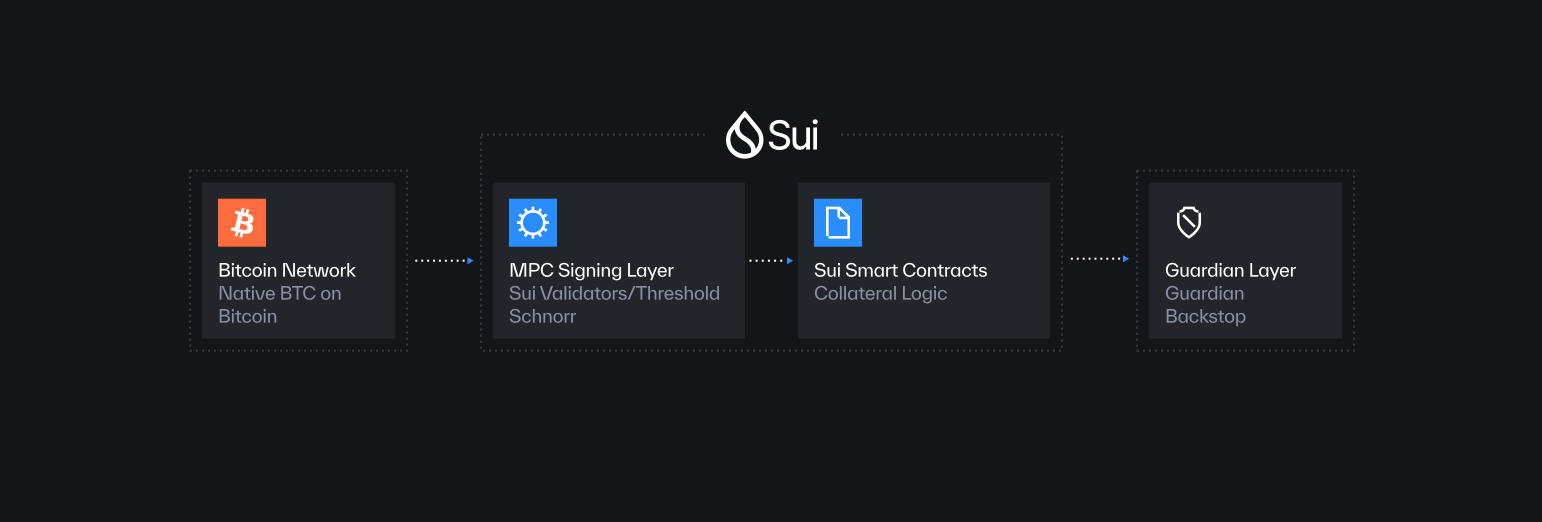
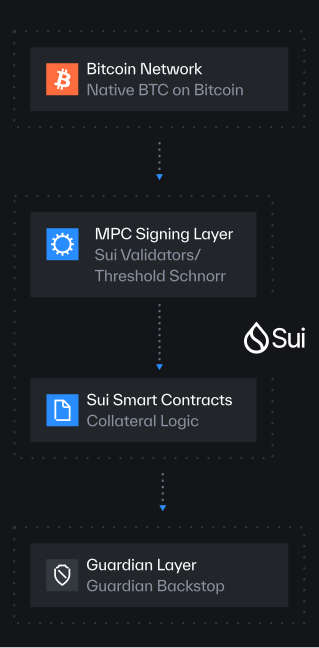
Threshold signatures
Funds move only when a one-third of validators produce a valid threshold Schnorr signature. No single point of failure. Improbable collusion.
Guardian backstop
A guardian layer acts as a secondary check before BTC is released, mitigating risks of validator collusion or systemic compromise.
Verified smart contracts
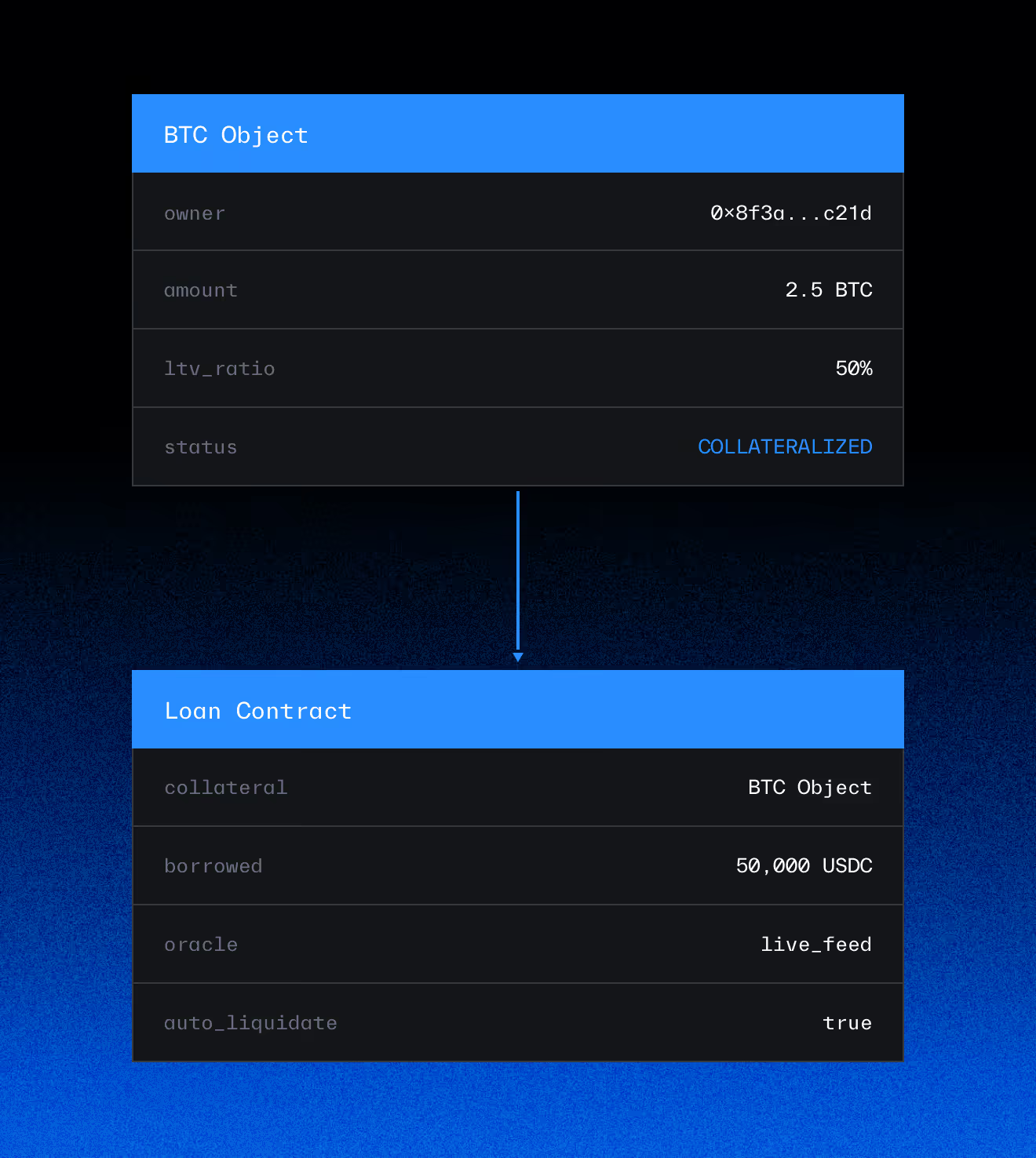
Sui's Move language enforces strict asset ownership. Sui smart contracts govern collateral parameters, LTV ratios, and liquidation logic–all defined in code.
Real-time oracles
Price oracles update valuations in real time. Collateral calls and liquidation execute automatically under venue-defined terms.

Custody-layer Bitcoin insurance
Hashi will support an available layer of protection through custody-layer Bitcoin insurance. If covered custody failures occur, claims are paid in Bitcoin.

What this unlocks
Once collateralized, BTC secures stablecoin liquidity. Returns come from clear interest spreads, not token incentives. Bitcoin remains held, not sold.
Borrow any asset
Including stablecoin liquidity for yield strategies, business expenses, trading, or personal use.
Tax efficiency
Debt-based structure may help avoid triggering taxable events tied to dispositions, subject to jurisdiction.
DeFi rewards
Integrate Sui Dollar to offset financing costs.
Interest spreads
Clear, transparent returns from interest spreads. No token incentive dependency, no hidden yield mechanics.
Why Sui
Built for programmable assets
Hashi depends on predictable, enforceable smart contract logic. Sui's Move language enforces strict asset ownership and allows for formally verified contracts.
Strict asset ownership model
Formally verifiable smart contracts
BTC treated as a programmable object in Move code
Automatic, transparent execution
No centralized intermediaries


Open infrastructure.Day-one integrations.
Hashi is built as open infrastructure, supported by an institutional ecosystem committed to making Bitcoin productive on Sui.
Explore integrationsCustodians
Institutional-grade custody workflows for secure BTC management and collateral operations.
Lending venues
Originate and manage BTC-backed credit products with on-chain transparency and automated risk management.
DeFi protocols
Incorporate collateralized Bitcoin liquidity into vaults, markets, and yield strategies.
Wallet providers
Hardware and software wallet integrations enable secure access across environments without new operational models.
From BTC to collateral in four steps.