All About Bridging
Sui supports transferring tokens and NFTs to and from other blockchains through Wormhole Connect and other services.
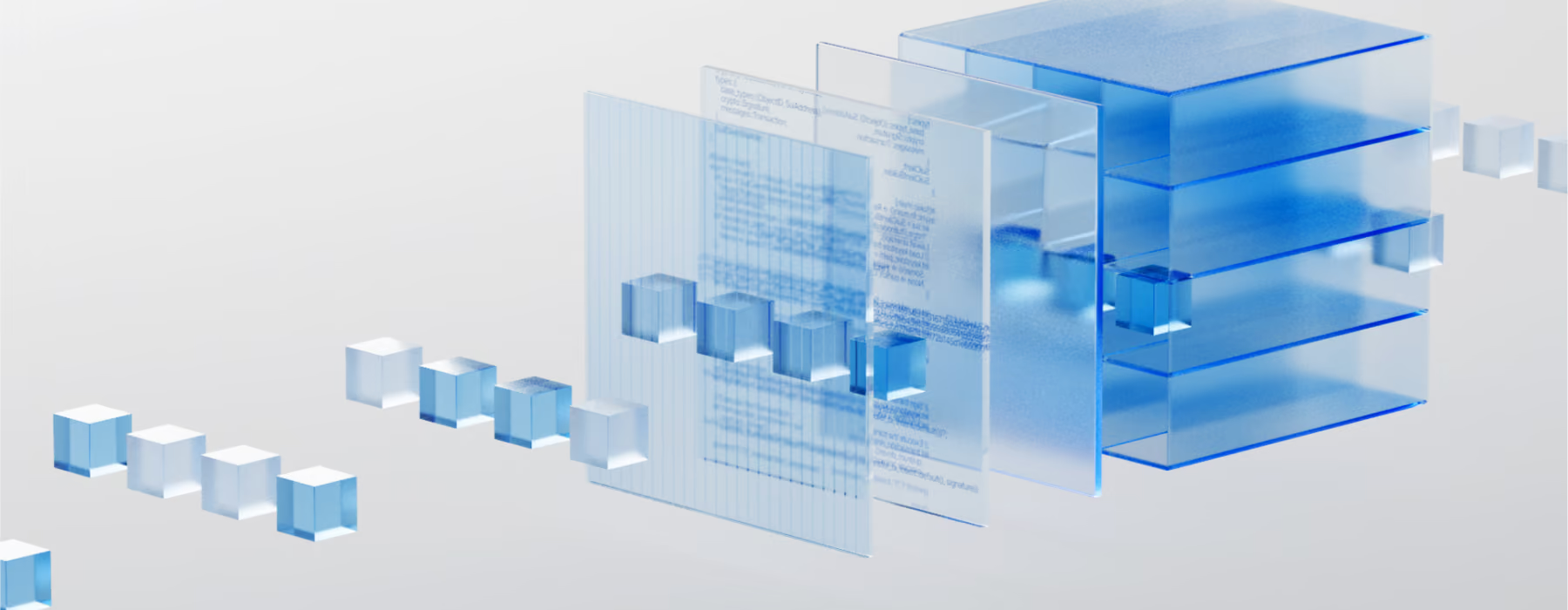
Blockchains generally support the concept of securely owned digital assets. However, owning an asset on one chain does not mean it can be moved to another chain. Bridging protocols, which support moving assets across chains, help solve what could be a major fragmentation problem in the industry.
Sui supports bridging through Wormhole Connect, built on the open source Wormhole protocol. Builders can implement the protocol through their apps and users can exchange assets directly through the Wormhole Portal Bridge. In addition, other services, such as Celer's cBridge, support bridging assets to and from Sui.
Along with NFTs and the SUI token, Wormhole Connect supports a range of tokens, from stable coins, such as USDC, to wrapped versions of popular tokens, including WBTC, WETH, and WSOL.
Transfer mechanics
Tokens native to one chain are not typically supported directly by another chain. Representing a token on a non-native chain requires wrapping it in a smart contract which the chain can read. The smart contract wrapper not only identifies the owner of the token, it records any changes in ownership.
Wrapped tokens often use a "W" in front of their native names, such as WBTC for Bitcoin. When someone initiates a bridge of ETH, the Ethereum token, to Sui using Wormhole Connect, the protocol mints the ETH as WETH, which can then be read by Sui. The wrapped token should trade at the same rate as its unwrapped counterpart.
The actions required to bridge tokens from one chain to another, which may involve ownership transfers and minting, incur gas fees. Sui supports Wormhole Connect automatic relay, a feature that collects any gas fees on the source chain, then transfers needed fees to the destination chain. In this manner, the user only pays to initiate the transfer, and does not need to pay a fee to receive their transferred tokens on the destination chain.
NFTs may also be transferred across chains through bridging. However, as NFTs on Sui may include complex, event-driven programming and object ownership structures, they may not perform as they were designed on other chains.
Asset ownership
As users discover their new favorite apps on Sui and appreciate the network's highly performant nature, they may want to move tokens and other assets they acquired. Bridging is the most direct way to move assets from one chain to another.
Bridging protocols support Sui's ethos of asset ownership. Instead of being locked into a specific environment, users should be able to transfer and use their digital assets anywhere they like.